




Introduction
One year after President Donald Trump returned to office promising, “The American dream will soon be back and thriving like never before,” the voters who will be the first to render judgment on that claim are not happy.
We spoke to thousands of voters who live in the battlegrounds – the swing districts and states that control the balance of power in the House and Senate. What we heard, overwhelmingly, was anxiety.
Many of these voters are focused on fundamental issues of economic survival: how to afford food, shelter, and utility bills. Many are worried about the disappearing safety net. A significant portion of the electorate is also either still concerned about unlawful immigration or newly concerned about ICE’s new aggressive tactics. But economic fears dominated the conversation.
These decidedly pessimistic views from voters across the political spectrum are animating an apparent fracture among Republicans’ key constituencies in these battlegrounds. Trump’s Republican allies in Congress have supported his leadership in near lockstep over the past year. But their constituents, including their base, have lost faith and patience in Trump’s economic vision and performance.
Using powerful voter models (see methodology below), we can look at the voters Republicans rely on to secure their majority: their solid base, voters who leaned Republican, and those without reliable partisan loyalties (unknowns). When we compare what we hear now from these voters in swing districts and states with what we heard a year ago, at the administration’s 100-day mark, the trend is stark.
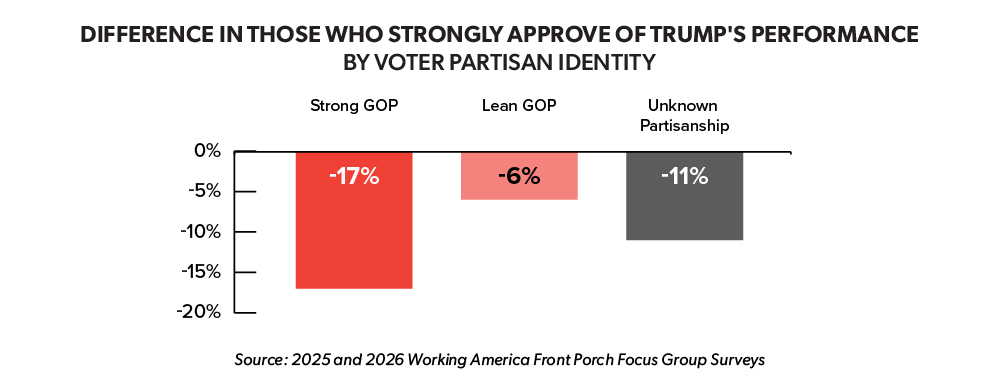
We asked slightly different questions in 2025 (approval on the economy) and 2026 (approval overall), but for a president who swept to office on economic discontent with his predecessor, this shift in sentiment is undeniably meaningful. At the same time, Democratic voters have become galvanized in their opposition. The voters in these battlegrounds are rejecting Republicans’ governing policies.
These are not aberrant moments of voter discontent. They are long-term trends. Because we engage voters in open and expansive conversations, we are able to delve deeper into what they are thinking and feeling beyond just yes/no answers. And because we talk to the same voters, and voters in the same communities, over years, we have a clear view into how opinions have shifted over time. (Notably, we completed this survey shortly before the U.S. launched a large-scale attack on Iran. Early public polling shows 1 out of 4 Republicans and almost 7 out of 10 Independents disapprove of the invasion, and oil prices surged quickly, suggesting that there would be little “rally around the president” effect in the immediate short term.)
Bottom line – we’ve seen these vibes before. In many ways, voters’ take on the economy, and the party in control of it, mirrors the skepticism we saw in early 2024 toward then-President Joe Biden’s economy. Given how strongly voters ultimately rejected Democrats’ leadership on the economy that fall, voters’ unease with Republican control now could mean an upheaval in these swing districts and states this fall.
| METHODOLOGY: In January and February 2026, we conducted 1,984 in-depth phone conversations and gathered 1,754 online survey responses across 22 competitive districts and eight competitive states, as well as a national sample of 1,005 voters outside of those competitive states and districts. For a full list of which districts were surveyed, see Appendix. Voters’ demographic, income, and education data are derived from information in the voter file. Voters have been categorized into one of five partisan identities based on the widely used Vote Choice Index (VCI) model that takes into account their voting history, demographic, and geography: Strong Republican, Lean Republican, Unknown Voter (a voter whose partisan beliefs are not predictable, based on our interpretation of the VCI model), Lean Democrat, Strong Democrat. When available, a voter’s partisan voting registration or partisan self-identification is also included or cited instead. |
The Trump Coalition Is Fracturing
As we spoke with voters on the phone and heard from them in online surveys, they overwhelmingly expressed anxiety and dissatisfaction with the country’s direction and its leadership.
| “I’m working 70 hours a week and still struggling.” – Michael Z., Strong Republican, PA-08 |
| “I’m very restricted and I can stand by a budget and live below my means. I’m eating a lot of day-old rotisserie chicken because you see meat cuts that are over $20. … There’s definitely signs the economy is struggling and I don’t think a lot of people have the same self-regulation that I do.” – Shenandoah R., Lean Republican, AZ-06 |
| “The government is stealing our taxes and taking it overseas while American people are struggling.” – Michael Z., Lean Republican, PA-07 |
| “I’m concerned because the price of living nowadays is so high you can barely afford food.” – Female voter, Lean Republican, Georgia |
Examining Trump 2024 Voters
We rely on our online survey to capture trends in voters’ views on candidates and elections. This approach avoids the biasing effects that come from live interviews asking about vote choice and allows our phone conversations to be more open-ended. Within that online survey, the trends were clear. Trump’s 2024 coalition is not holding in these battleground districts and states.
Voters in these competitive areas who told us they chose Trump in 2024 were twice as likely as Vice President Kamala Harris’ voters to say they were considering bolting from their party. We always expect some drop off in party adherence moving from a presidential election year to a midterm year, as some voters stay home and others pay less attention to the candidates. Therefore, we were not surprised to see that 12% of Harris’ 2024 voters in competitive districts and states told us they were planning to not vote, vote Republican or third party, or they weren’t sure. But for Trump’s 2024 voters, that attrition rate doubled, reaching 24% in competitive districts and states, 19% in our national sample.
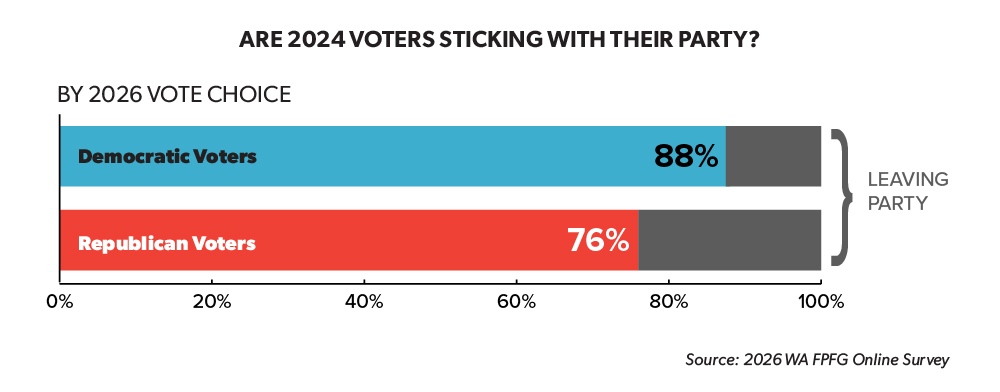
Our survey sample also includes about 1,000 people who we surveyed on Election Night 2024 about their vote. Voters who told us in 2024 that they voted for Harris, voted third party, or did not vote almost unanimously told us the same thing now. But about 11% of those voters who told us on Election Night 2024 that they chose Trump are now reporting that they voted for someone else.
Research suggests that when voters change their answer like this, it means a shift in their current political intentions. These answer-changing voters are separate from (and in addition to) the 24% of Trump voters looking to bolt from the party that are mentioned above.
There was a similar imbalance when we asked voters in our online panel about the direction of the country. Based on long-established partisan trends, we would expect 2024 Harris voters to be negative on the direction of the country and on the president’s job performance, and for 2024 Trump voters to be positive. But while Harris voters were almost unanimous about the country being on the wrong track, Trump’s voters were not nearly so united.
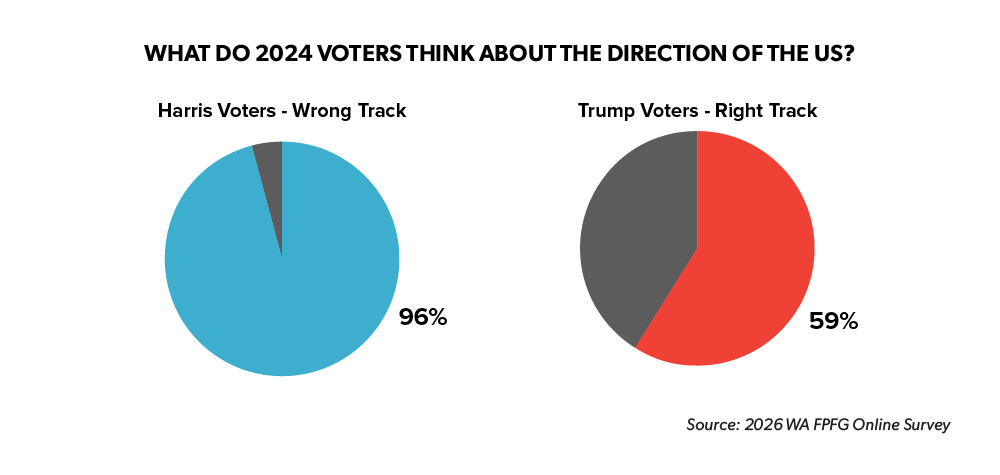
Strong Republicans in competitive districts and states were more pessimistic than the national trend: 5% more likely to say the country was on the wrong track and 6% more likely to disapprove of the president.
What’s driving this shift? Some of the trends look remarkably similar to voters’ views of Biden in early 2024. At several points below, we will highlight issues of bipartisan concern in which Republican and Democratic voters alike disagree with the policy choices of Trump and his Republican allies in Congress over the last year.
Among Trump’s 2024 voters:
- 42% told us they disapprove of his cuts to government assistance programs like SNAP (food stamps) and Medicaid.
- 23% said they were worried about the impact those cuts would have on them or someone they know.
- 35% said they disapprove of Trump’s “favorite economic policy”, tariffs.
Many of the less-partisan voters to whom we spoke expressed a kind of exhaustion. They had lost patience with Trump’s vision for the economy.
End of Trust in the Trump Economy
Trump confidently declared during a recent speech in Georgia that he had “won affordability.” That message seems to be resonating about as well as President Biden’s declarations of a strong economy did in early 2024 – which is to say, not very well at all. Voters, including many in the GOP base, appear highly skeptical of attempts by the Trump administration and its Republican congressional allies to dismiss affordability as no longer a problem.
When we took a hard look in 2024 at how voters viewed the Biden economy, we noted that despite strong fundamental macroeconomic numbers like GDP growth and unemployment rate, the Fed’s consumer sentiment index was at a two-decade low. Americans were not confident in the economy, no matter what the stock market said. What was a cautionary flag then may be a waving red one now – that same index is now at record lows, approaching the depths of the COVID economy and the stagflation era of the 1970s.
In 2024 and again now, we heard that rising concern clearly on the phones when we talked to battleground-area voters. Various pocketbook issues were named as the top issue for almost three-fourths of these voters. Rising costs surged from last year to become the single top concern by a wide margin this year. This was true across party.
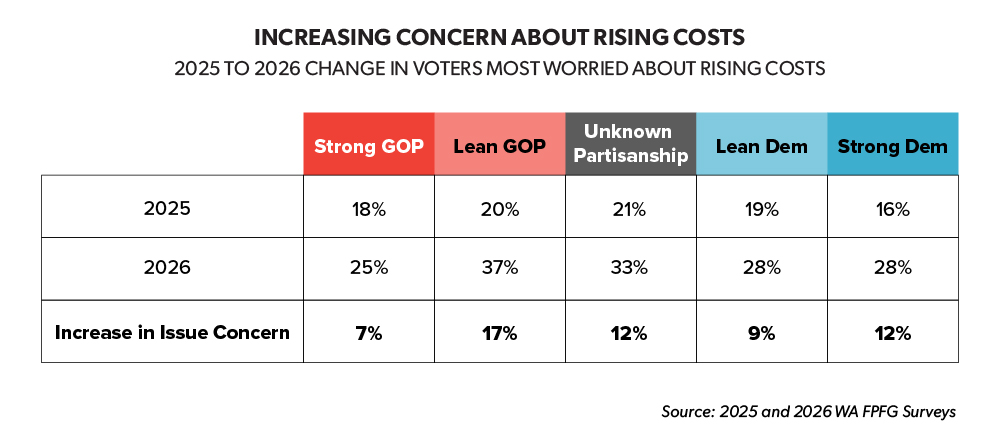
We drilled down on this concern by asking voters to tell us the biggest economic challenge they faced in their daily life. The two most common responses – regardless of income, age, party, or geography – were the fundamental issues of food and shelter (either rent or mortgage). There was some predictable variance, such as young people being twice as likely to be worried about housing as seniors, but the rank order was remarkably consistent. Even relatively well-off households making more than $100,000 named the cost of food as a top concern.
We saw similar trends in our online survey, when we asked voters to tell us what, if any, economic challenges they faced. Most picked two or three, and concerns over the cost of food, utilities, and either rent or mortgage far outpaced all other options.
Medical bills also registered as a significant concern for many voters across party. We learned throughout this survey that medical costs, medical debt, and cuts to government healthcare have climbed to the point in which once-theoretical warnings about healthcare policy have become concrete, visible problems to a wider demographic swath of Americans. That emerging reality seems to translate into powerful differences to a voter’s overall economic outlook. (More on this later.)
| “I look at what the president is doing to the economy and it is just appalling.” – Richard W., Strong Republican, PA-08 |
| “Not sure how I can live without some of these programs.” – Male voter, Strong Republican, North Carolina |
| “Food for the family is sometimes tough.” – David P., Strong Republican, Alaska |
|
“They are talking about affordability, but all they do is talk.
We need action now.” – Henri M., Strong Democrat, PA-08 |
Medical Debt Is a Sleeper Issue That Transcends Political Identity
Voters’ optimism about the economy almost always varies by partisanship, with supporters of whomever is currently president more positive about the state of the economy. The same is true here, with Republican voters scoring the economy more positively than Democrats.
But personal lived experience of the economy can influence those views.
This is where we see some similarities to the picture in early 2024. Back then, many of the voters who were key to the Democratic coalition in swing districts told us that they were not experiencing the economic success of which Biden was boasting. Unemployment rates were low, but that wasn’t translating into rising pay for them, which meant that they couldn’t keep up with rising costs. Voters who had not gotten a raise recently were more likely to have a negative view of the economy.
| “Rising costs (are my most important issue). Stability. Utilities are in a state of flux currently. … I could go either way on the economy, on any day.” – Andrew D., Strong Republican, Alaska |
| “Wages are low, people are struggling. I really wish Trump was not in office.” – Christopher H., Strong Democrat, IA-01 |
This year, we found that medical debt is an illuminating example of the impact of lived experience.
More and more Americans from across different demographics, including many who have some form of health insurance, are now facing dangerous levels of medical debt. That has meant that more middle-class and even wealthy families are learning what working families have known for years – that the healthcare system in America is fundamentally flawed.
In our conversations with voters, it came up as a bipartisan issue that captures the frustration many voters are feeling over an economy that they see as rigged against them. And it served as a powerful predicting variable for their views on other issues.
Almost 30% of voters across our full online sample said that medical bills were one of their biggest daily challenges, and that was constant across every income level.
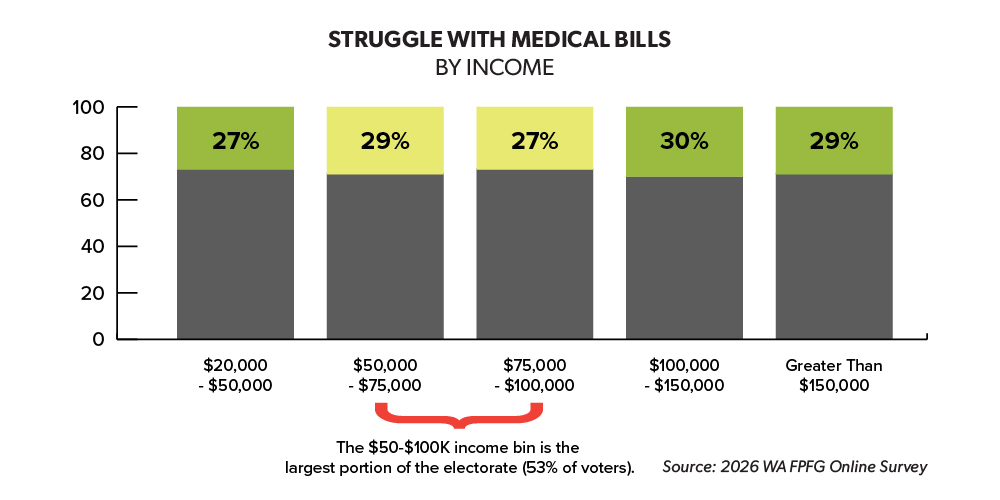
We asked voters in our online survey if they had ever heard from a collection agency over an issue of medical debt. Nearly 1 in 4 said they had. This wasn’t just low-income families; it included 15% of the voters we spoke to who make more than $75,000 a year.
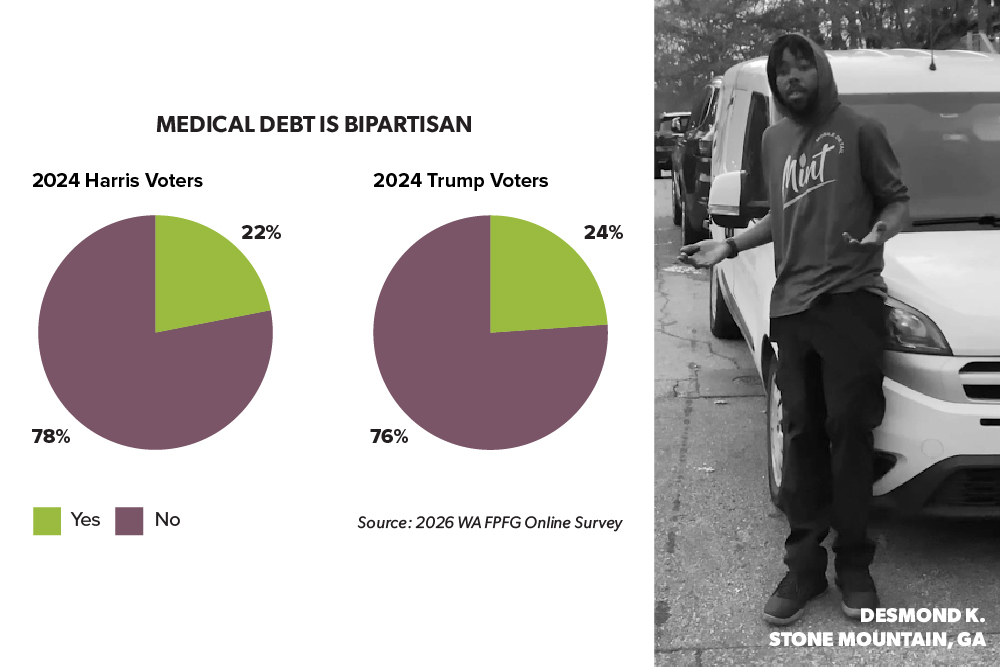
It was also nearly identical across partisan divisions in both battleground areas and when looking across our combined online sample. Medical debt defies the conservative bootstrap myths about who deserves help and who doesn’t. Families facing high medical debt have often worked hard and been financially responsible. But because of illness or injury they had no control over, and an insurance system that lets thousands of families fall through the cracks, they are facing bills far beyond their ability to pay. Often these debts prompt patients to delay care in fear of incurring more debt, or are so stressful that they make already sick patients sicker, leading to a vicious spiral.
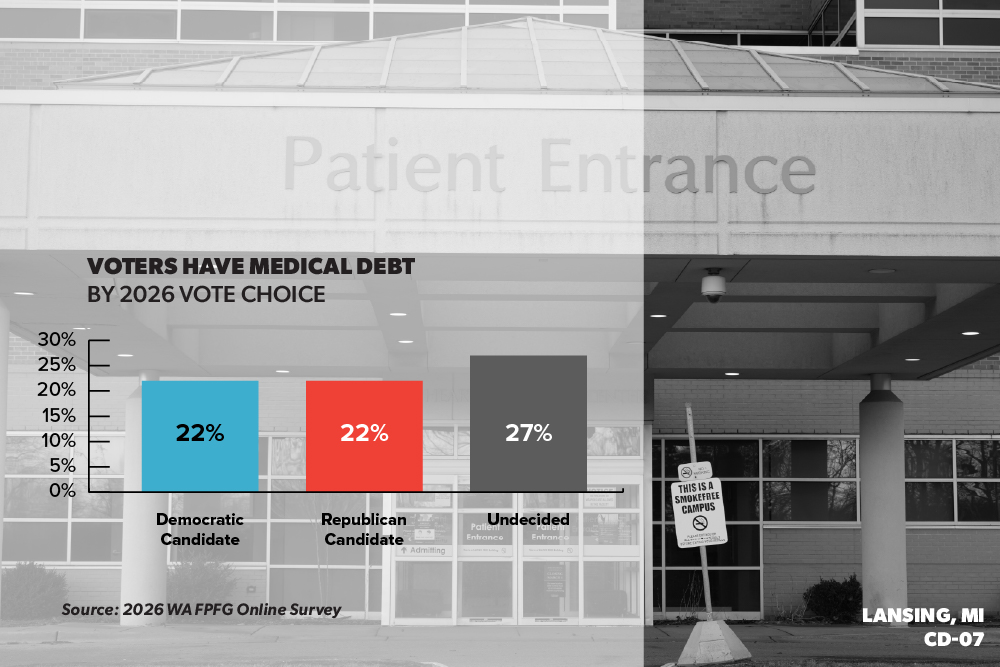
Concerns about medical debt transcended party, age, and the urban-rural landscape, but was most sharply felt by Black voters.
Voters who have faced this level of medical debt had a very different outlook on the country. They were sharply more pessimistic when we asked them to rate their level of concern about the economy on a scale of 1 to 10, more likely to be worried about cuts to the social safety net, more likely to see the impact of cuts to the Social Security system, and less approving of the president.
People with medical debt vs. everyone else:
- Level of concern about the economy (1 to 10 scale): average of 1.7 points higher
- Worried about cuts to social safety net: 14% higher
- Who have seen impacts of cuts to Social Security staff: 12% higher
- Net approval of President Trump: 12% lower (among 2024 Trump voters)
Incumbent Republican lawmakers face a liability here. Medical debt is already a bigger problem in Republican-led states, because many chose not to expand Medicaid to cover more adults once the U.S. Supreme Court made that part of the Affordable Care Act optional. According to a report by the Urban Institute, “79 of the 100 counties with the highest levels of medical debt were in states that have not expanded Medicaid under the ACA.” In our online survey, the rate of voters reporting high medical debt was 6 points higher in competitive districts and states than in our national sample.
In July 2025, the Republican Congress made that problem worse through passage of the “One Big Beautiful Bill Act” (OBBBA) demanded by Trump, which created further restrictions on Medicaid, likely driving more people into medical debt.
At the same time, the Trump administration abandoned a Biden administration rule that kept medical debt off of credit reports and followed up in October by moving to prevent states from passing similar laws. Without such protection, families who face high levels of medical debt – again, through no fault of their own – can find their credit destroyed, making it difficult to buy a house or car.
Republican lawmakers sought to insulate themselves from the political repercussions of cutting Medicaid by delaying the implementation of most cuts until 2027 – but hospitals are closing right now in early 2026.
That’s because about a third of Medicaid funds flow to hospitals. Hospital managers across the country were forced to start planning around the cuts as soon as the bill passed, and now hundreds of hospitals are expected to close nationwide, both urban and rural. One December study concluded that 756 rural hospitals are now at risk of closure because of financial problems.
These closures represent an immediate and visible impact of Republican cuts in cross-pressured districts – an impact that affects entire communities, not just Medicaid recipients. Voters see the impact: We found that voters who live in communities that are facing a high number of hospital closings, such as in Iowa and North Carolina, are more likely to be aware of those closings than voters in less affected areas.
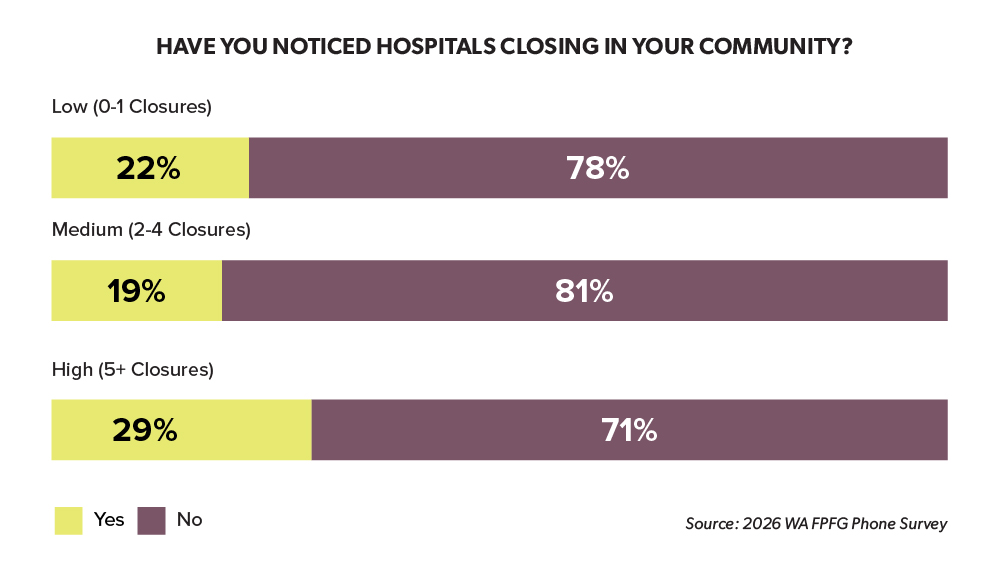
Collectively, these measures add up to a set of concrete policies that nearly every sitting Republican member of Congress has either voted to approve or has tacitly endorsed, but which are demonstrably against the interests of large numbers of their supporters.
Nor are these the only such issues. The social safety net, long maligned by the conservative movement, has surprisingly high levels of bipartisan appeal.
The Silent Constituency for America’s Safety Net Programs
A year after Trump took office and began slashing the federal government, many of the cuts to America’s social safety net are starting to feel real to people.
All together, the OBBBA cut over $1 trillion from the safety net, primarily through cuts to Medicaid, the Affordable Care Act (Obamacare) and SNAP (food stamps). The Congressional Budget Office estimated that 7.5 million people would lose Medicaid coverage, and 3 million would lose access to SNAP benefits.
The Trump administration has also found other ways to undermine programs for low-income families, such as freezing money for needy children (TANF) that goes to Democratic-led states, restricting access to housing support for some immigrant families, freezing billions in funding for public school programs that serve needy families, and slashing thousands of jobs at the Social Security Administration – hamstringing a program that millions of retirees rely on to survive.
Political conventional wisdom that dates back to President Bill Clinton’s 1990s “welfare reform” platform often treats these programs as politically toxic with moderate voters. But our conversations made clear that a strong, if quiet, constituency for these programs exists in these swing districts. In many cases, voters expressed their support for these programs in a hesitant or heavily qualified way, but the concern was still there.
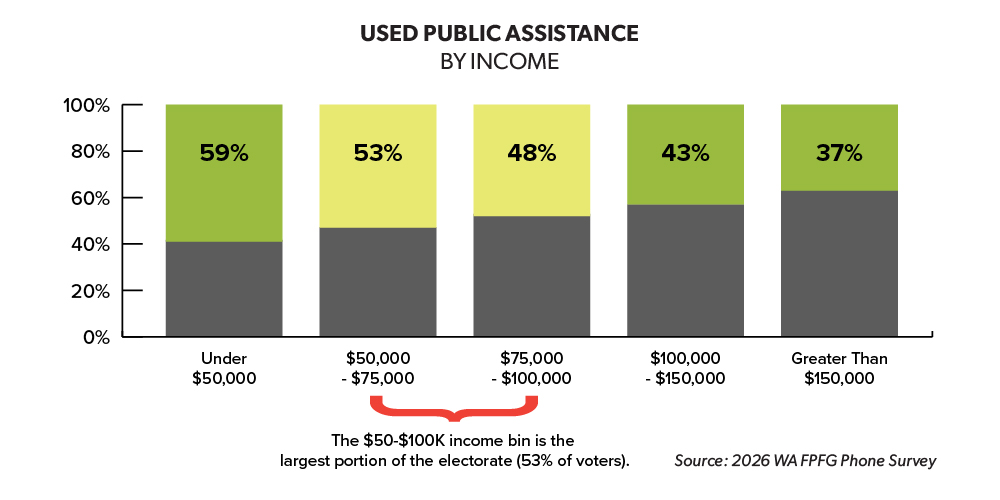
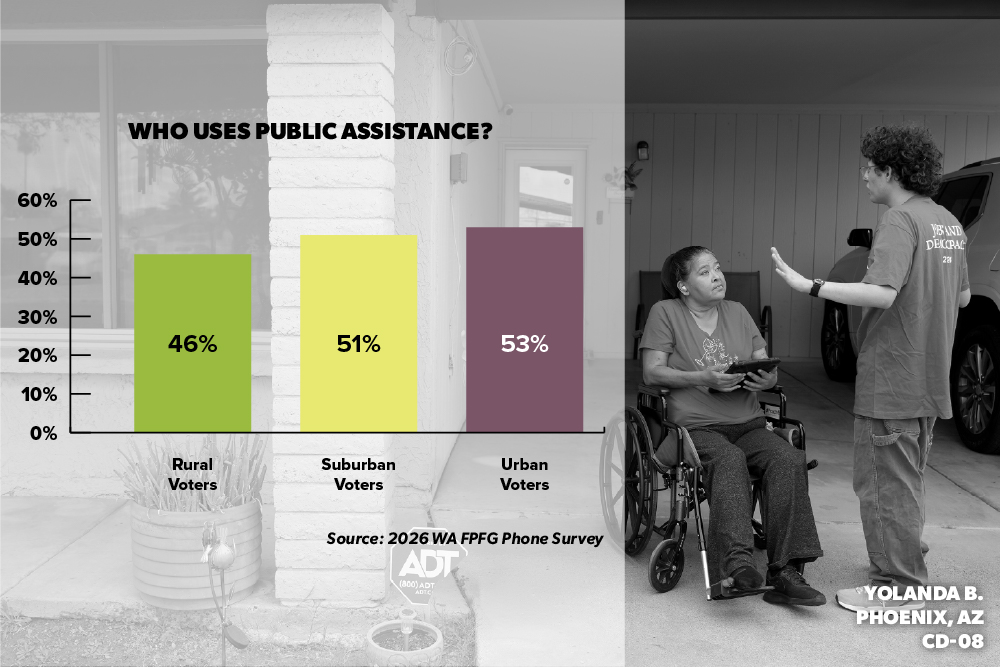
We asked voters two questions. First, whether they used a government safety net program such as SNAP or Medicaid, or knew someone who did. A majority said yes, with a relatively small difference between even the most partisan Republicans and Democrats.
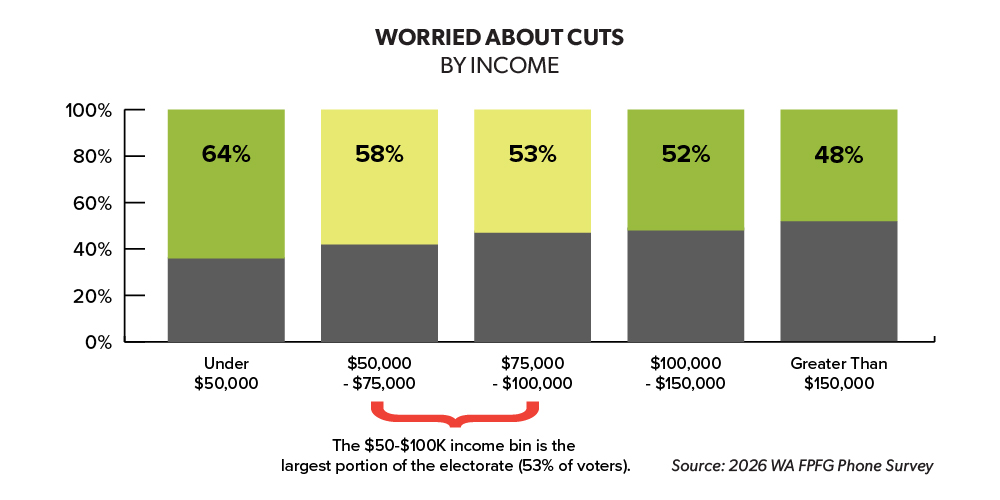
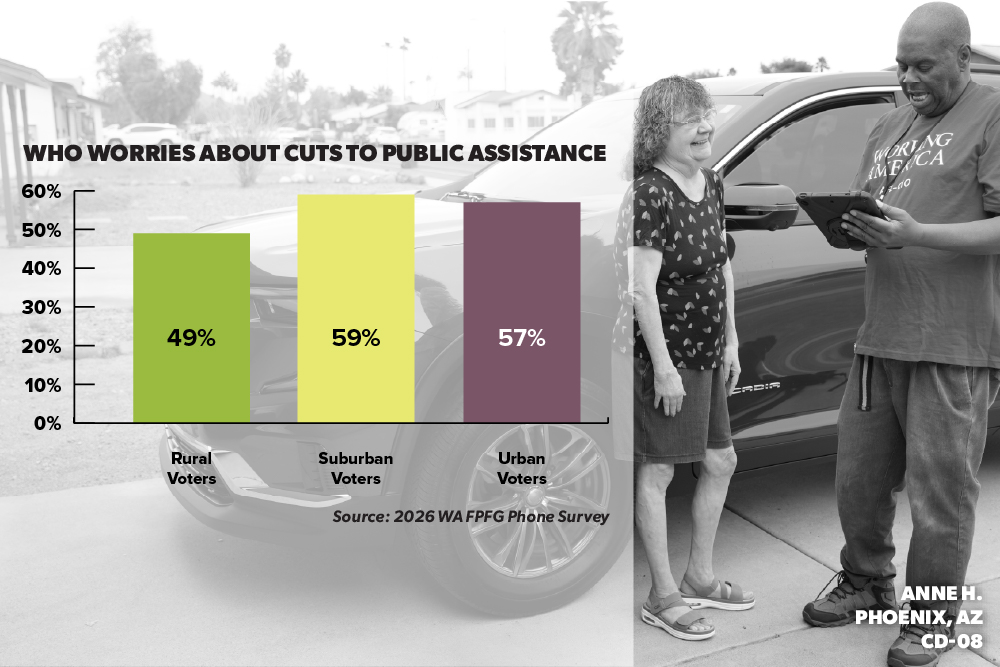
Second, we asked voters whether they were worried about the new cuts and restrictions in these programs enacted by the Trump administration. Here we saw a much bigger partisan gap that played out as expected. But even so, more than a third of Republicans said they were worried.
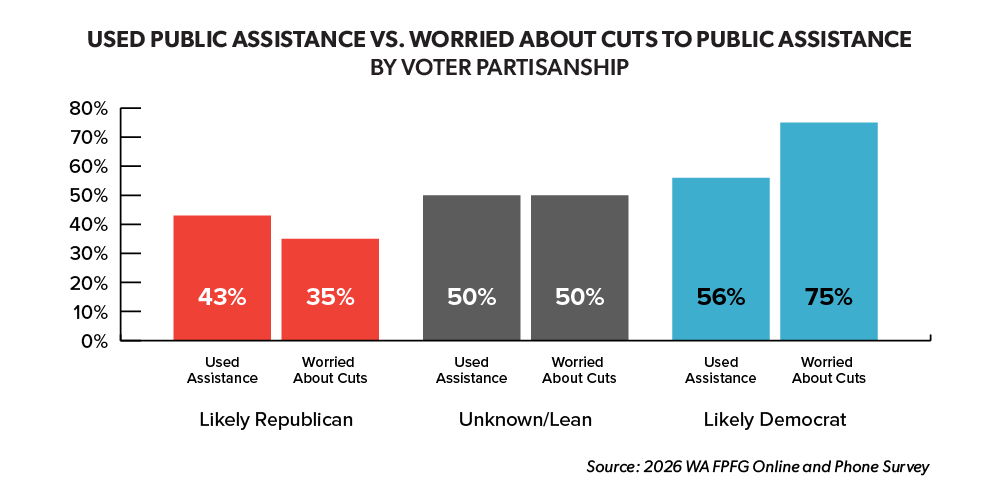
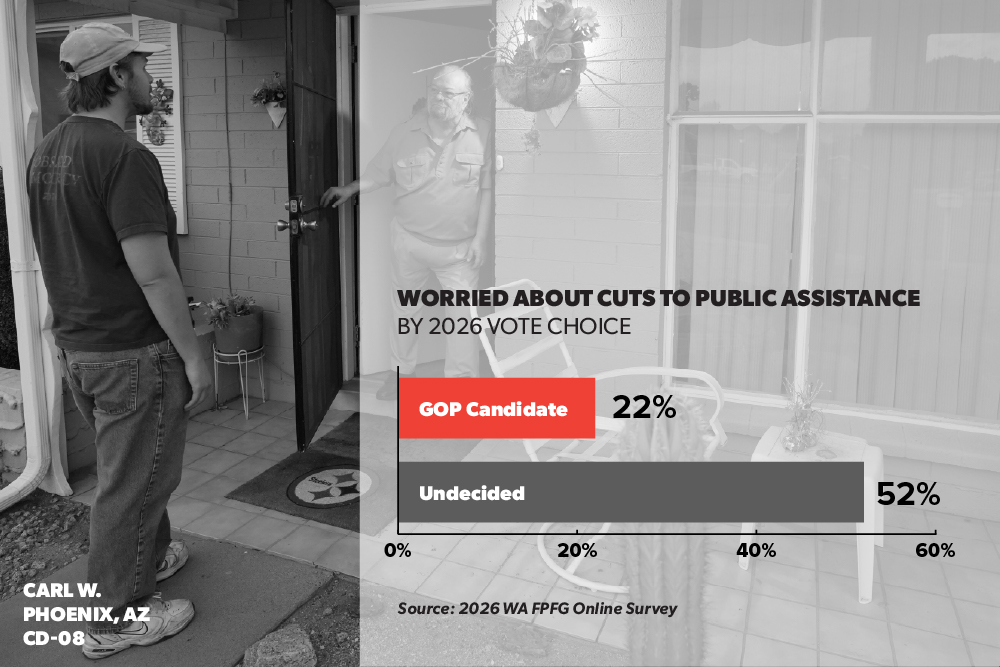
This difference in level of concern about cuts also plays out in 2026 vote preferences, with Undecided voters meaningfully more worried than those supporting the GOP members of Congress who enacted the cuts.
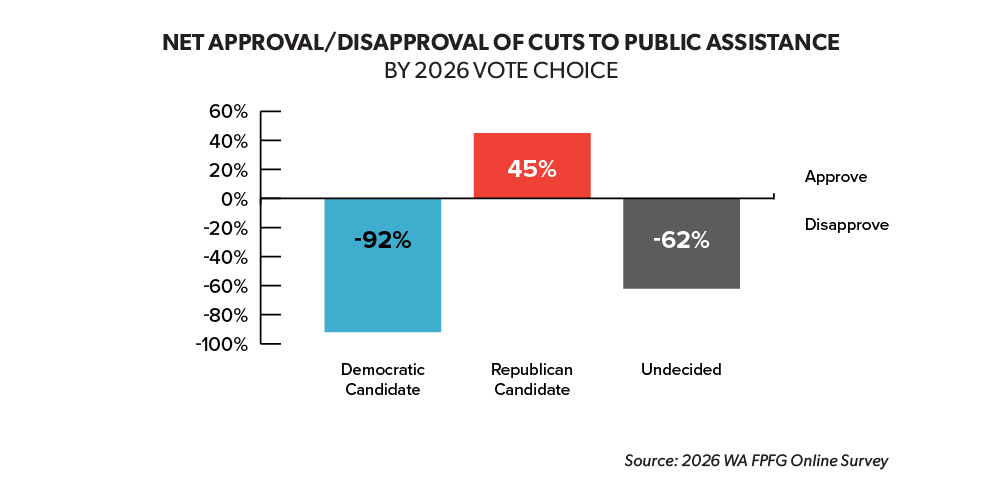
Despite the lack of worry about cuts, when we asked voters in our online panel about the cuts that have already happened, less than half of GOP voters approved of them. When looking at our entire online sample all together, we see voters who are still undecided on their 2026 vote are much closer to Democratic voters on this issue.
Use of public assistance and worry about cuts to that assistance was also surprisingly stable across income…
… and geography.
In our online panel, almost a third of 2024 Trump voters are worried about the cuts, and those voters hold very different political views than other 2024 Trump voters. They are:
- Much more disapproving of Trump’s current performance (net approval of +14% vs. +64%)
-
Much more worried about their own finances (level of concern averages
7.1 out of 10 vs. 4.9)
- Harris voters averaged 6.2
- Much more worried about the national economy (level of concern averages 7.5 out of 10 vs. 5.5)
-
More likely to face medical debt (41% vs. 17%)
- For Harris voters it was 22%
That relationship carries across the electorate – concern over cuts to the safety net is tightly linked to broader economic anxiety. Four-fifths of the people who said their level of concern about the national economy was 9 or 10 also said they were worried about program cuts.
Fears Over Social Security Are Being Realized
The change in voters’ concerns around Social Security is a concrete example of how Trump’s year in office has made an impact.
In 2025, we asked voters in competitive districts how they felt about Social Security. There was broad support, across voters of both parties, for more funding to the program. Fear of cuts, at the time, was mostly limited to Democratic voters.
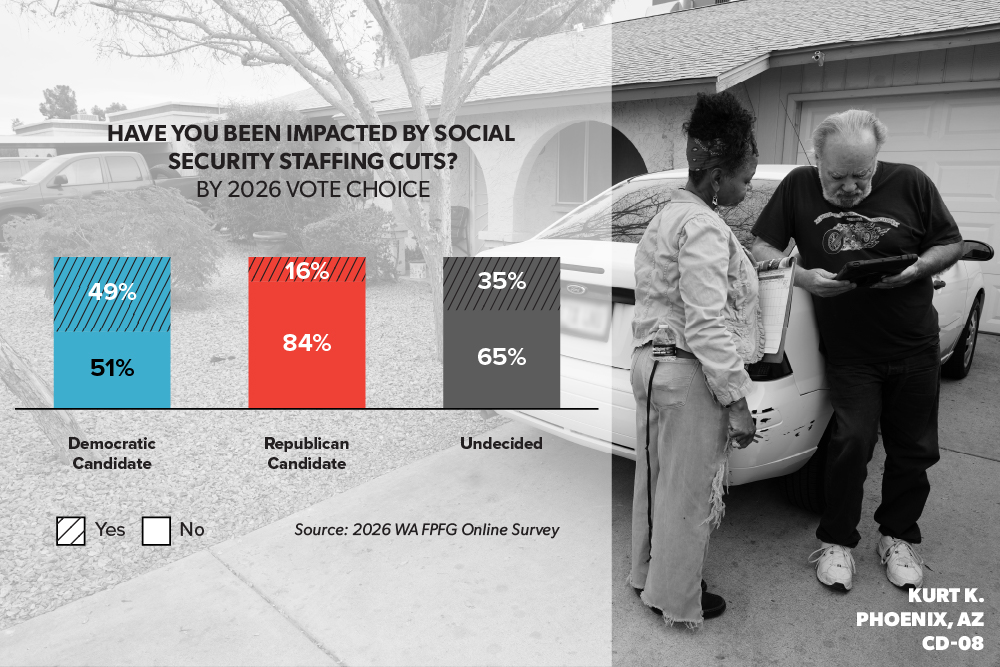
Now in 2026, more than 1 in 3 voters in our online panel reported being impacted by cuts to the Social Security Administration staff. It was relatively similar across different age groups, meaning that plenty of people who are not yet retired are either seeing older relatives struggle to get their benefits, or are having difficulty with Social Security’s other programs for disability or survivors’ benefits.
| “I’m wondering if Social Security will be readily available when I need it in the future.”- Karen M., age 53, Lean Democrat, ME-02 |
| “We’re seniors living on a fixed income. We’re worried about cuts to Social Security and privatizing Medicare.” – Judith M., age 76, Strong Democrat, Alaska |
| “I’m wondering if Social Security will be around,” Natalie M., age 65, Strong Democrat, North Carolina |
There was a partisan gap in this response, but swing voters across our full online sample (those who were not yet sure about their 2026 vote) were closer to Democrats than Republicans.
Support Is Nuanced
Our conversations with voters about the safety net were some of our most complex, and a good example of why open-ended, organic conversations with voters are essential to a full understanding of the political and economic picture.
Stigma surrounds many of these programs, which can mask the level of support for them reflected in surface, snapshot polls. Even though a majority of voters we spoke to opposed the cuts, the voices that supported cuts were the most strident and passionate. Many who used the programs felt a need to justify or defend their participation.
Strong Republican voters had the greatest dropoff from use of these programs (42%) to worry about the impact of cuts (35%). We heard repeatedly from those voters that despite their support for these safety net programs, cuts were still needed. They felt safe from the cuts because they had faith that they would target others – immigrants, urban populations, or the person across the street – who they believed were guilty of fraud.
| “There will be plenty of benefits after the fraud and illegals are off.” – Male voter, intending to vote Republican, AZ-01 |
| “I don’t understand why we want to rip food out of the hands of children and the elderly.” – Samantha S., Strong Democrat, IA-03 |
| “I support the Trump cuts. It may be uncomfortable at first, but things will be better for everyone in the long run.” Jeffrey R., Strong Republican, PA-07 |
| “A lot of people can’t afford groceries now. Cutting their benefits doesn’t help. They still have to eat.” – Cheryl S., Strong Democrat, North Carolina |
| “I see (the cuts) as getting rid of fraud.” – Charles S., Strong Republican, IA-03 |
| “I wouldn’t be able to afford my medication without Medicaid.” – Beau C., Strong Republican, Alaska |
At the same time, many voters told emotional stories about the role that the safety net has played in their lives, providing powerful testimony to counter the endless claims of “fraud” coming from the administration.
| “My mom is on Medicaid. It’s scary to think about her losing that.” – Joshua F., Lean Democrat, MI-07 |
Many Republican Policies Are Emblematic of What Voters Oppose
Several other economic policies from Trump and his Republican allies in Congress appear to be at odds with the concerns and desires of the voters who are key to their constituency. Regardless of the individual policy’s impact on a given voter, they add up to a cohesive narrative of policy that is hurting, not helping, working families.
Tariffs
The picture on tariffs is dynamic, as Trump’s months-long trade war was upended by the U.S. Supreme Court just days after we completed our survey.
Voters in our online panel were broadly opposed to the tariffs imposed by President Trump. Support split along partisan lines, but still only 26% of Strong Republican voters said they “strongly approved” of the policy. That makes it much less popular than other policies among the GOP base. Across our full online sample, only 18% of the voters who were undecided for 2026 said they approved of the Trump tariffs.
Bank Overdraft Fees
This is another clear example where the vote records of Republican members of Congress clash with the preferences of Republican voters.
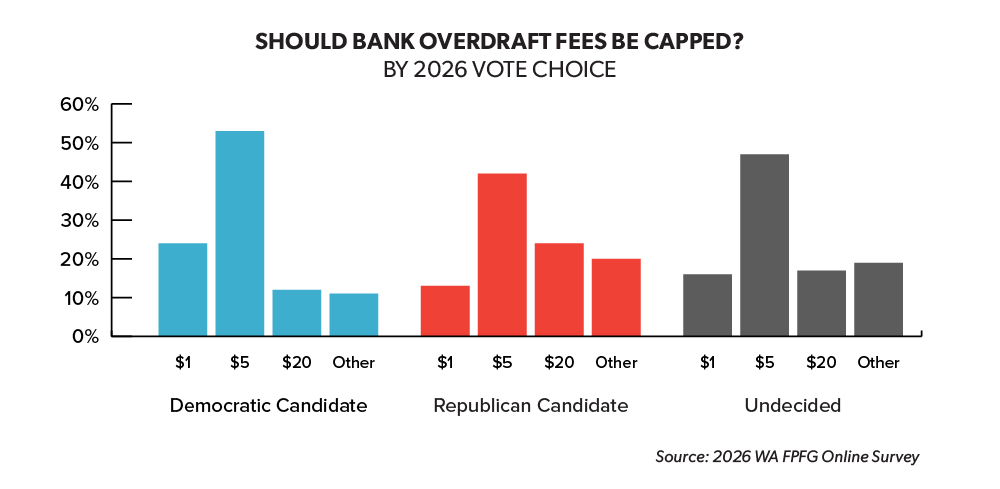
Near the end of Biden’s term, the Consumer Financial Protection Bureau finalized a rule that prevented banks from charging customers more than $5 when they overdraw their account. Overdraft fees have historically cost customers about $35 per transaction and can add up quickly. The provision was sharply opposed by the banking lobby. When Republicans took control in 2025, they voted almost unanimously to overturn the rule, removing any cap.
But 77% of the voters we spoke to across both our battleground and national samples thought that was a bad idea and favored some sort of cap on bank overdraft fees. This opinion was shared broadly across income and partisanship. While opinions varied slightly on how much the cap should be, even 52% of Strong GOP voters thought the cap should be at $5 or lower.
| “You are charging people short on money more money. It doesn’t make sense.” – Male voter, Lean GOP, NC-04 |
| “People are living paycheck to paycheck. They can barely afford daily essentials let alone a big overdraft fee” – Female voter, Strong Democrat, OH-09 |
Immigration Remains a Priority – But Not Necessarily in the Same Way as Before
Concern over immigration showed up strongly in our survey, which was conducted just after the killing of Renee Good and Alex Pretti by ICE agents in Minnesota, while the debate around immigration dominated the national news. For that reason, the topline numbers about immigration may not mean what they usually do.
This year, 14% of voters named immigration as their top issue, up from 6% last year, including significantly more Democratic voters.
But it appears that many of the voters prioritizing immigration may be actually expressing a concern about ICE and immigration enforcement, as 59% of the voters we spoke to said they disapproved of ICE, including almost 1 in 3 Strong Republicans. Across party, 34% of the voters in our online panel who named immigration as their top concern said they disapproved of ICE.
Looking at different demographics, opposition was strongest among Black voters, at 81%, compared to 69% among Hispanic voters and 59% among white voters.
Criticism of ICE was carefully couched by Strong Republicans. Even many of those who supported ICE still said they did not like the agency’s current tactics: their entry into homes without warrants, their use of chemical irritants on protestors, and the excessive level of force. Others said they supported targeted deportation but thought that ICE’s indiscriminate mass deportations were hurting their workforce or communities.
| “I approve (of ICE) as long as it’s, you know, done within the constraints of the law.” – Joel H., Lean Republican, AZ-06 |
| “It could be handled better than what we are seeing on the news.” – Deka B., Strong Republican, NE-02 |
| “I do understand that we need to enforce the laws. Do I agree with the way they’re doing it? Absolutely not.” – Michael R., Strong Republican, AZ-06 |
But for Democrats, ICE’s new tactics were seen as a sharp and existential threat. We heard terminology from the activist left coming from ordinary voters.
| “I’m upset with the Senate and Congress for not doing anything about this dictator. There is not any other president that would have gotten away with what he does, we have Hitler. He’s letting ICE do what they want to do. They’re going into schools and taking children and I’m just hoping something is done about this before our allies turn on us.” – Jo F., Strong Democrat, NE-02 |
| “We need to control Trump’s constitutional breaking activities.” – Teresa P., Strong Democrat, AZ-06 |
Importantly, disapproval of ICE did not necessarily correlate with acceptance of immigration or support for immigrants. In our online panel, 44% of Lean GOP voters in swing areas said they did not approve of ICE and 18% were not sure. But even more of those same Lean GOP voters, 72%, said they also approved of new, tougher requirements for the legal immigration process.
Takeaways
Eight months before the midterm election, voters are carrying just as much anxiety about the economy, or more, as they were at this point in 2024.
That anxiety is tightly linked to both rising costs and the administration’s cuts to safety net programs. Those programs are more widely used – and cuts to them are more unpopular – then the conventional wisdom would have you believe.
The administration’s decisions on safety net cuts, the economy, and even immigration have not been popular, even with significant portions of the president’s base.
The 2026 midterms are not likely to play out on the same terms as the 2024 elections did. Narratives are shifting and new possibilities are emerging for voter engagement.
Appendix
Below is a count of our phone and online survey respondents by congressional district.
| Congressional District | Phone Count | Online Count | Competitive District | Competitive State |
| AK-01 | 298 | 8 | X | |
| AZ-01 | 0 | 20 | X | |
| AZ-03 | 0 | 12 | ||
| AZ-04 | 0 | 25 | ||
| AZ-05 | 0 | 8 | ||
| AZ-06 | 165 | 66 | X | |
| AZ-08 | 0 | 15 | X | |
| AZ-09 | 0 | 7 | ||
| CA-05 | 0 | 55 | ||
| CA-09 | 0 | 43 | ||
| CA-13 | 24 | 27 | X | |
| FL-07 | 0 | 10 | X | |
| FL-09 | 0 | 23 | ||
| FL-10 | 0 | 14 | ||
| FL-11 | 0 | 10 | ||
| FL-15 | 0 | 12 | X | |
| FL-23 | 0 | 8 | X | |
| GA-03 | 0 | 13 | X | |
| GA-04 | 0 | 25 | X | |
| GA-05 | 0 | 31 | X | |
| GA-06 | 0 | 15 | X | |
| GA-07 | 0 | 10 | X | |
| GA-09 | 0 | 9 | X | |
| GA-10 | 0 | 11 | X | |
| GA-13 | 0 | 10 | X | |
| IA-01 | 195 | 17 | X | X |
| IA-02 | 0 | 8 | X | X |
| IA-03 | 226 | 12 | X | X |
| KY-03 | 0 | 15 | ||
| ME-02 | 151 | 8 | X | X |
| MI-03 | 0 | 9 | X | |
| MI-05 | 0 | 19 | X | |
| MI-06 | 0 | 47 | X | |
| MI-07 | 118 | 26 | X | X |
| MI-08 | 0 | 15 | X | |
| MI-09 | 0 | 20 | X | |
| MI-10 | 0 | 37 | X | X |
| MI-11 | 0 | 40 | X | |
| MI-12 | 0 | 37 | X | |
| MI-13 | 0 | 35 | X | |
| MN-02 | 0 | 29 | ||
| MN-03 | 0 | 87 | ||
| MN-04 | 0 | 99 | ||
| MN-05 | 0 | 56 | ||
| MN-06 | 0 | 78 | ||
| MN-07 | 0 | 13 | ||
| MN-08 | 0 | 12 | X | |
| MO-01 | 0 | 17 | ||
| MO-02 | 0 | 31 | ||
| MO-03 | 0 | 20 | ||
| MO-08 | 0 | 13 | ||
| NC-01 | 75 | 31 | X | |
| NC-02 | 15 | 82 | X | |
| NC-04 | 8 | 61 | X | |
| NC-05 | 15 | 55 | X | |
| NC-06 | 14 | 41 | X | |
| NC-09 | 11 | 26 | X | |
| NC-10 | 11 | 24 | X | |
| NC-13 | 36 | 34 | X | |
| NE-02 | 157 | 13 | X | X |
| NV-01 | 0 | 12 | ||
| NV-03 | 0 | 11 | ||
| NY-22 | 27 | 12 | ||
| OH-01 | 0 | 26 | X | |
| OH-02 | 0 | 14 | X | |
| OH-03 | 0 | 30 | X | |
| OH-04 | 0 | 13 | X | |
| OH-05 | 0 | 37 | X | |
| OH-06 | 0 | 23 | X | |
| OH-07 | 0 | 83 | X | |
| OH-08 | 0 | 22 | X | |
| OH-09 | 0 | 23 | X | |
| OH-10 | 0 | 24 | X | |
| OH-11 | 0 | 42 | X | |
| OH-12 | 0 | 19 | X | |
| OH-13 | 0 | 24 | X | |
| OH-14 | 0 | 30 | X | |
| OH-15 | 0 | 15 | X | |
| PA-01 | 0 | 47 | X | |
| PA-02 | 0 | 46 | ||
| PA-03 | 0 | 30 | ||
| PA-04 | 0 | 38 | ||
| PA-05 | 2 | 35 | ||
| PA-06 | 0 | 22 | ||
| PA-07 | 140 | 45 | X | |
| PA-08 | 154 | 33 | X | |
| PA-10 | 141 | 57 | X | |
| PA-11 | 1 | 11 | ||
| PA-12 | 0 | 31 | ||
| PA-14 | 0 | 20 | ||
| PA-15 | 0 | 9 | ||
| PA-16 | 0 | 10 | ||
| PA-17 | 0 | 30 | ||
| VA-05 | 0 | 50 | X | |
| VA-06 | 0 | 33 | X | |
| VA-09 | 0 | 54 | X | |
| WI-01 | 0 | 11 | X | |
| WI-04 | 0 | 19 | ||
| WI-05 | 0 | 14 |